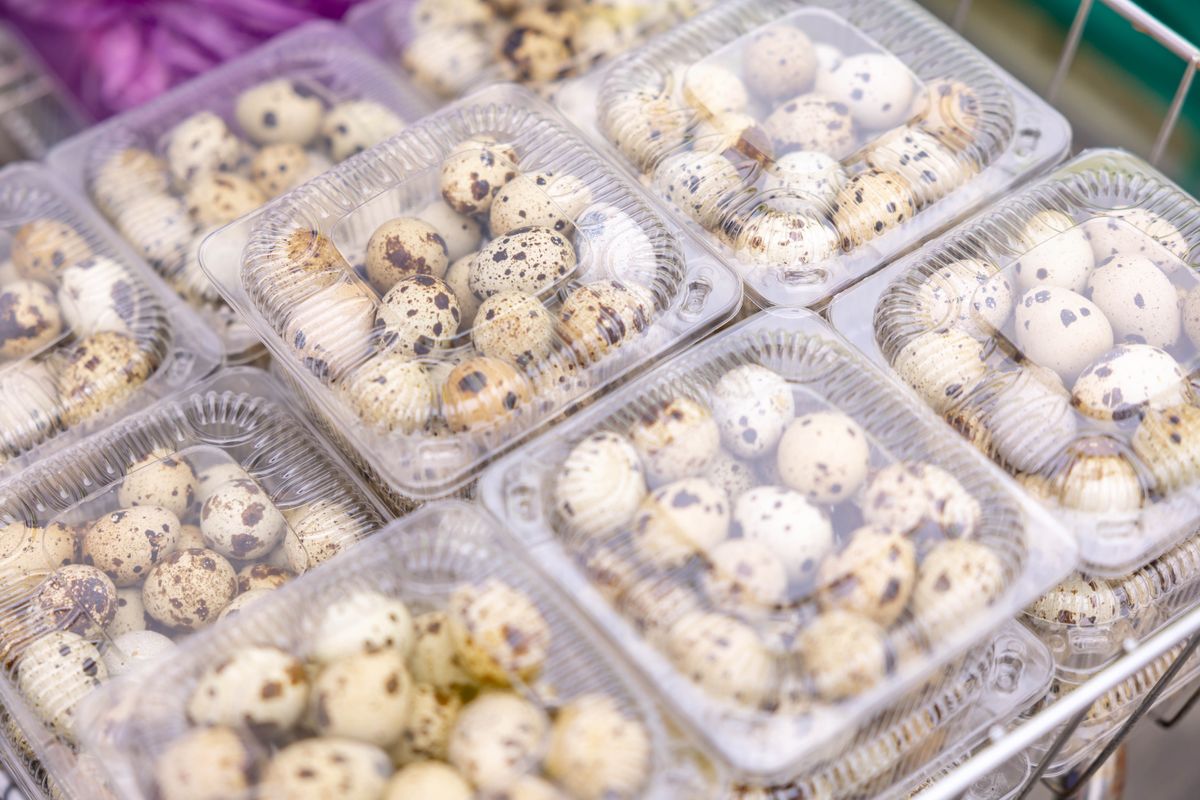
A healthy Coturnix hen lays close to one egg a day at peak — commonly 200 to 300 per year, with about 200 a typical first-year count. Peak output runs through roughly the first year of lay, then declines.
The headline numbers: near-daily lay at peak, commonly 200–300 eggs a year, with about 200 a typical first-year count per NSW Department of Primary Industries guidance. The useful knowledge is the shape around those numbers, because a flat number can't tell you whether your quiet Tuesday is a problem.
The curve of a laying life. First egg between six and eight weeks old (stress or short daylight can push it toward ten or twelve). Production climbs fast to near-daily. Peak lay runs through roughly the first year, poultry extension guidance treats the first year of lay as the economically productive window, which is why commercial operations turn their laying flocks annually. Through the second year, lay declines; most backyard hens still produce, just not at first-year pace (where lifespan fits in). Keepers planning steady supply run rolling flocks, hatching replacements and retiring seniors, rather than expecting year-three hens to lay like year-one hens.
The two inputs the number depends on:
Light. Lay runs on day length: 14+ hours for sustained production. On natural light alone, expect the natural seasonal shape, strong through long days, a real slowdown into autumn and winter. Supplemental light on a timer maintains winter lay; a deliberate winter rest is the alternative policy. (Whether continuous lighting shortens hens' lives is long-standing keeper belief rather than established fact; we grade it as such.)
Calcium and ration. Near-daily shelling is a mineral outflow that the layer program, layer ration plus free-choice oyster shell, exists to refill. The warning lights of a shortfall are soft or shell-less eggs before they're missing eggs.
What normal variance looks like: single skipped days (an egg takes over a day to build, so perfectly daily is the exception), a synchronized dip after any covey stress (a move, a predator scare at the wire, heat waves, sudden weather; working keepers report lay pausing for days after storms), molt, and the seasonal curve above. What's not normal: a sustained multi-week collapse in good light and feed. Work the checklist: light hours, calcium dish, stressors, parasites, and whether a hen is hiding eggs in bedding you haven't excavated.
Egg size, while we're counting: standard lines lay eggs commonly cited at 9–12 g; jumbo lines at 12–16 g, roughly 50% larger, which changes your conversion math and your carton game.
FAQ
Do they lay year-round?
Under 14+ hours of light (natural or supplemented), essentially yes. On natural short days, no, and that's biology, not malfunction.
One hen, how many eggs a week?
Five to six in season; that's the arithmetic behind the 300-a-year top end. Plan coveys on that math (the flock-size math).
Do they need a rooster to lay?
No. Production is identical without one; roosters change fertility, not output.