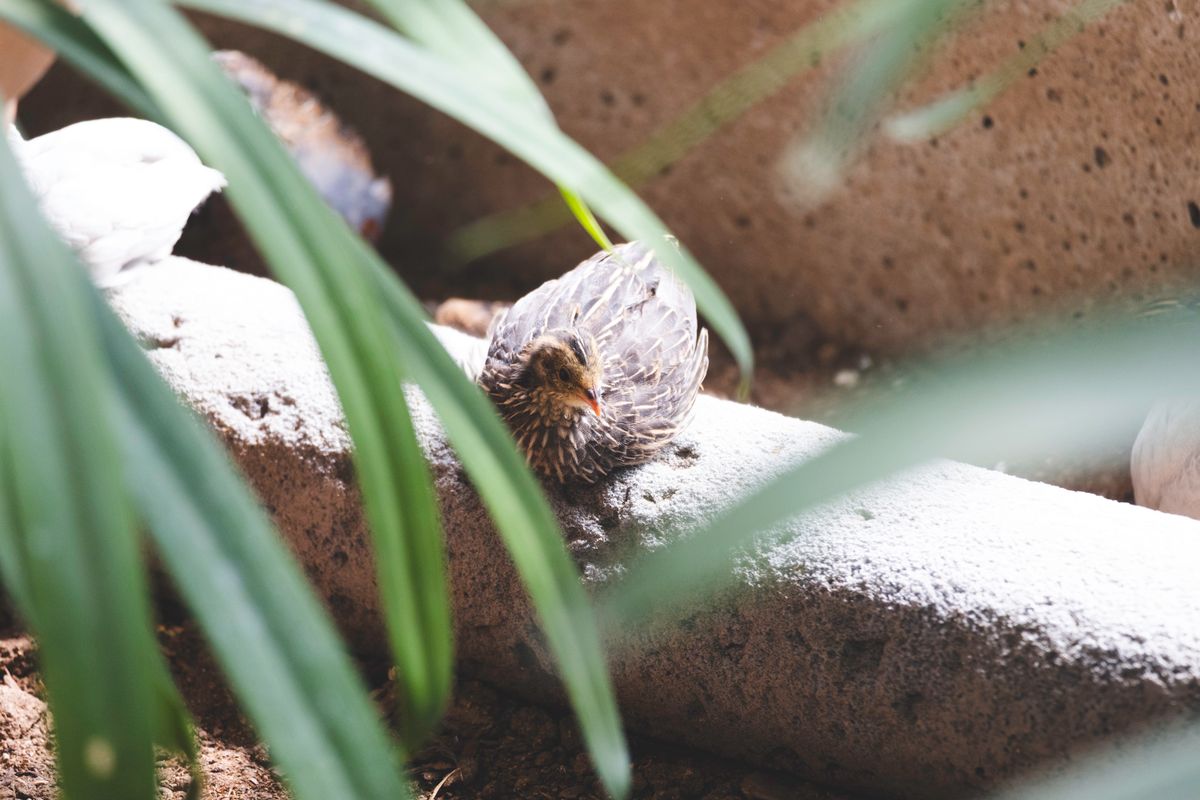
Typically 2–3 years. The scientific maximum on record is about 6; keepers occasionally report more. Production settings often keep hens only 1–2 years, which drags the numbers people quote.
The typical Coturnix lives two to three years, the figure where the scientific database (AnAge, the standard longevity reference, which logs wild-type Japanese quail at 2–3 years with a recorded maximum of six) and the bulk of keeper sources converge. But search this question and you'll meet everything from 1.5 to 5-plus, and the spread is four different questions wearing one question's clothes:
Which bird? Selection for production speed borrowed from somewhere: jumbo meat lines are widely reported to run shorter than standard birds. It's a keeper adage with a plausible mechanism (bigger, faster-grown bodies age harder), though it remains consistent report rather than proven fact.
Which management? Production operations replace laying hens at one to two years; peak output runs from roughly 2 to 12 months of age, and many operations turn the flock annually. A "lifespan" quoted from that world describes a career, not a biology. Related, and worth flagging as keeper belief rather than established fact: the long-standing view that year-round artificial light (continuous laying, no winter rest) shortens hens' lives. Plausible, and repeated for decades, but not rigorously demonstrated.
Which luck? Predation, disease sweeping a small covey, heat events. A quail's cause of death is usually an event rather than old age. Most of "lifespan management" is really housing and biosecurity.
Which care? The levers that move the number are the unglamorous ones: correct ration (the ladder), clean dry housing, low stress (cover, routine, no predator pressure at the wire), and catching illness early in a species that hides it.
The shape of a quail life, for planning: mature and laying by 8 weeks, peak production through the first year, visible aging from about a year (AnAge's marker), decline in lay through year two, and a natural end most often somewhere in year two or three. Which is why established keepers run rolling flocks, renewal by hatch, retirement by choice (the meat answer or the pampered-pensioner answer, both honest).
And the emotional fine print, since this page is often read before a first purchase: quail compress the whole arc (hatch, adolescence, productivity, age) into a couple of years. For some keepers that's the appeal (a child sees the full cycle; a breeding program iterates fast). For someone wanting a five-year companion animal, a chicken is the better contract. Neither answer is wrong; buy the bird whose timeline you actually want.
FAQ
Can a pet quail reach 5 or 6?
Documented ceiling says possible; keeper threads carry credible 5-and-6-year reports. Plan for 2–3, protect ruthlessly, and be delighted by outliers.
Do males and females live differently?
The near-daily egg output is a real metabolic load on hens, and production-world numbers reflect hen careers. Solid head-to-head longevity data by sex is scarce, so treat any confident claim with suspicion.
How do quail usually die?
In backyard practice: predation and accident first, disease second, discovered-in-the-morning age-related decline third. The ordering is why the predator page is the real longevity page.