Three days before expected hatch — day 14–15 for Coturnix. Stop turning, lay eggs flat off the turner, raise humidity to 65–75%, and don't open the incubator again until hatching is finished.
Lockdown is the point where incubation stops being a management task and becomes a self-control exercise. Everything you physically do takes five minutes. Everything you must not do takes three days.
The five-minute setup
Three days before your expected hatch date (day 14 or 15 of a Coturnix incubation, depending on whose calendar arithmetic you follow), do the following, all at once, in one opening:
- Stop turning. Remove eggs from the automatic turner (take the turner hardware out entirely if you can, hatched chicks and turner mechanisms don't mix), and lay them flat on the incubator floor on the mesh or a shelf-liner surface.
- Raise humidity to 65–75%. Usually this means filling additional water channels or adding a wet sponge. Do it in this same opening.
- Do your last candle before this moment, not after. Clears and quitters out (candling guide); everything dark goes back.
- Close the lid. That's it. You're done until there are dry, fluffed chicks.

Why each piece matters
Turning stops because the chick is done developing and is now maneuvering into hatch position: head to the wide end, beak toward the air cell. Continued turning disorients that process.
Humidity goes up because hatching is a mechanical act: the chick pips internally into the air cell, then cuts a lid around the shell's circumference. The exposed inner membrane must stay pliable for that to work. Let it dry and it toughens around the chick ("shrink-wrapping"), which turns a routine hatch into a trapped bird. This is the mechanism behind the one rule everyone shouts:
The lid stays closed. Every opening dumps your humidity spike precisely when the membrane is most exposed. A hatching incubator at 70% humidity recovers slowly; a chick drying into its membrane doesn't recover at all. Chicks that have already hatched are fine in there. They're wet, they're loud, they'll bumble around knocking into unhatched eggs (harmless, arguably motivational), and they can live over a day on absorbed yolk. They come out when they're dry and fluffed and hatching is done, not before.
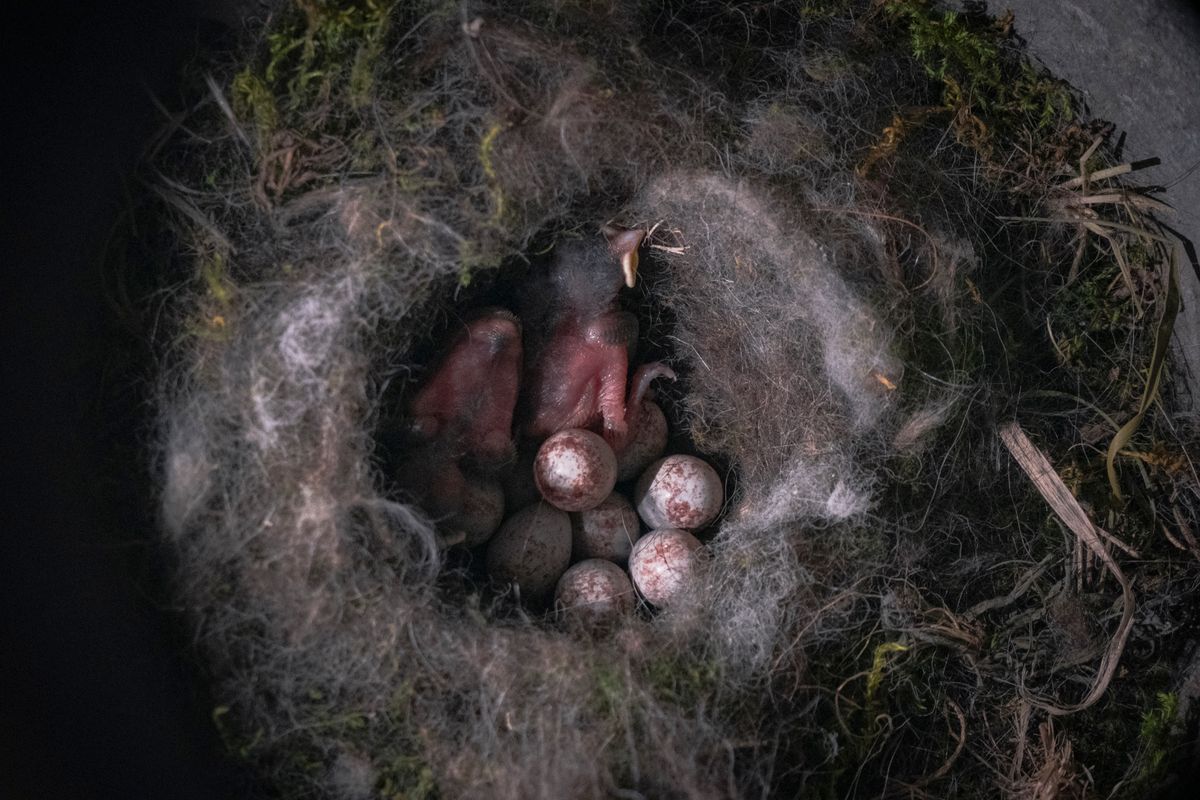
What you'll see through the window
Day 15–16: possibly nothing, possibly eggs rocking. Internal pips happen out of sight. Day 16–17: external pips, a raised chip or tiny hole. Pip to full hatch can take hours; a chick resting mid-zip is normal, not stuck. Day 17–18: the main event, usually compressed into a day. If day 19 arrives with pips but no progress, or nothing at all, move to troubleshooting; it covers the narrow cases where intervening beats waiting, and the many where it doesn't.
Then: chicks dry, lid open, straight to a warmed brooder.
FAQ
My humidity won't reach 65%.
More water surface area, not deeper water, evaporation scales with surface. Add a sponge or a second shallow dish. Practical reality from working keepers: mid-50s to 60s with a sealed lid beats 75% achieved by repeated topping-up openings.
A chick hatched and is trampling the other eggs.
Normal. Leave it. The eggs are sturdier than they look and the chick is fine.
Can I help a stuck chick?
Almost never, and never early; most "stuck" chicks are resting. The narrow exception is covered in troubleshooting; read it before touching anything.