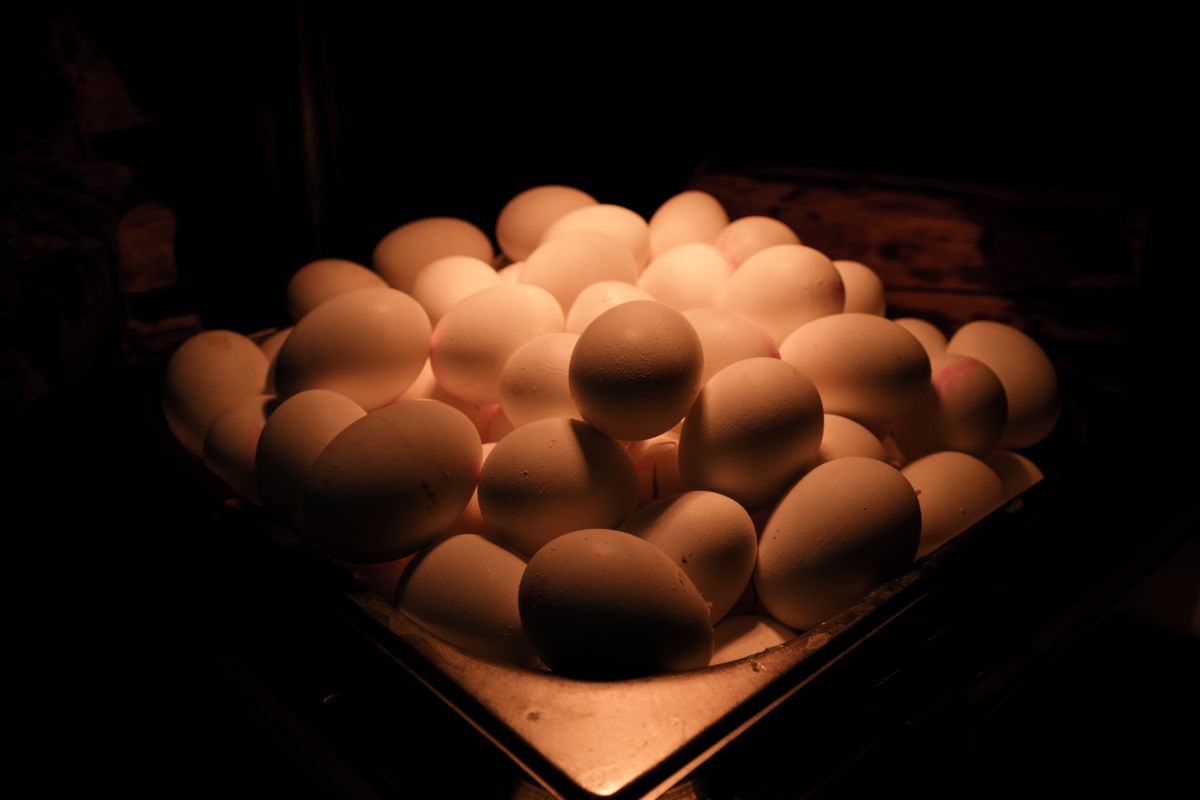
Candle on day 7 and day 14, in a dark room, with a bright narrow-beam light against the egg. Veins mean alive; clear means infertile; a blood ring means it stopped early.
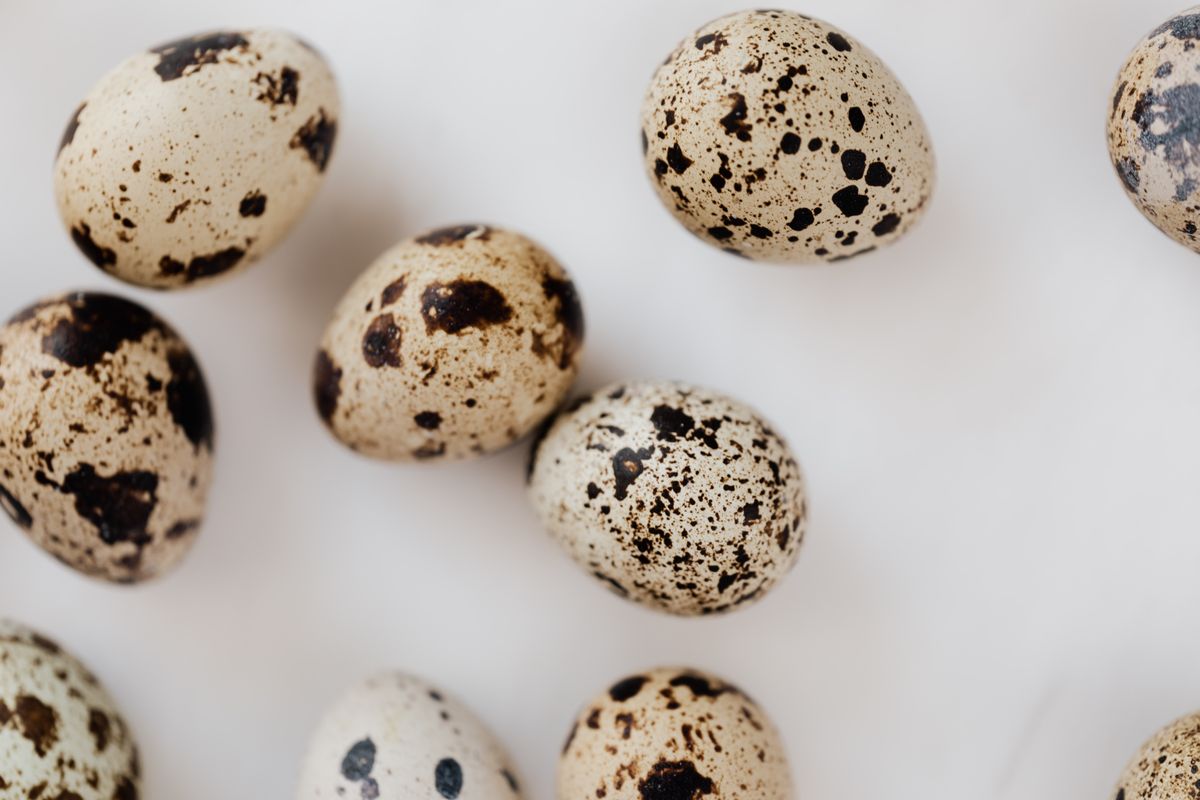
Candling is holding a bright light against an eggshell to see what's happening inside, and with quail eggs, managing your expectations about how much that is. The shells are small, thick for their size, and camouflage-speckled. The dramatic backlit photos you've seen online are mostly chicken eggs. You'll see less. That's normal, and it's still enough.
The method
A dark room, dark, not "lights dimmed." A bright, narrow-beam light: a phone torch works, a cheap LED candler works better. Hold the light against the egg's wide end (where the air cell lives) or, for the clearest view of the contents between days 7 and 12, come in from the narrow end. Clean, dry hands, gentle grip, back in the incubator within about thirty seconds. That's the entire skill; the rest is knowing what you're looking at.
What you should see, when
Day 5–7, the fertility check. A living egg shows a web of blood vessels, often with a dark spot (the embryo) at the center; by day 7 it's big enough to read with confidence, which is why day 7 is the classic first candle. A completely clear egg (light passes through like a tiny lantern) is infertile or never started. A blood ring, a thin sharp red line around the inside of the shell in any orientation, is an embryo that started and died early. Both come out of the incubator; they won't recover, and a rotting egg in a warm box is a risk to the others.
Not sure? Mark it in pencil and leave it until day 14. Nobody ever lost a hatch by giving an ambiguous egg another week.
Day 10–12, the reassurance candle (optional). Development is fast now: you may make out the head, an eye, sometimes movement. This candle is for morale rather than decisions.
Day 14, the pre-lockdown check. A healthy egg now looks mostly dark with a clearly defined air cell at the wide end; the chick fills the shell. This is your last look, and the one decision point: clears, blood rings, and anything that stopped developing come out; everything dark goes back in for lockdown. The air cell matters too. It should occupy a meaningful chunk of the wide end (roughly the top third by lockdown). Small air cells across the batch mean your humidity ran high; large ones mean it ran dry. Adjust: this hatch if it's early enough, the next one regardless. This feedback loop is the reason candling matters more than any humidity table (here's why).
After lockdown, nothing. The chick is maneuvering into hatching position, and every candle costs humidity and time at temperature. From day 14–15, the lid stays shut and the light stays in the drawer. If a mystery egg is still bothering you on day 19+, the troubleshooting guide covers late candling and what to do with it.
The pre-set candle nobody mentions
Candling before incubation, before the eggs ever go in, shows hairline cracks and detached or rolling air cells (common in shipped eggs). Cracked eggs don't get set. Detached-air-cell eggs can be set upright and unturned for the first few days to let the cell settle; hatch odds are reduced but not zero.
FAQ
Can I candle every day?
You can; don't. Each candle is cooling and handling. Two scheduled candles (7 and 14) catch everything a daily candle would, minus the risk.
The egg is too dark to read anything.
Common with quail; speckled shells beat cheap lights. Try the narrow end, a brighter light, a darker room. If it's still unreadable, treat it as developing and re-check at day 14.
I saw movement at day 14. Is that normal?
Normal and a good sign. No visible movement at day 14 is not automatically bad; chicks rest, and quail shells hide a lot.