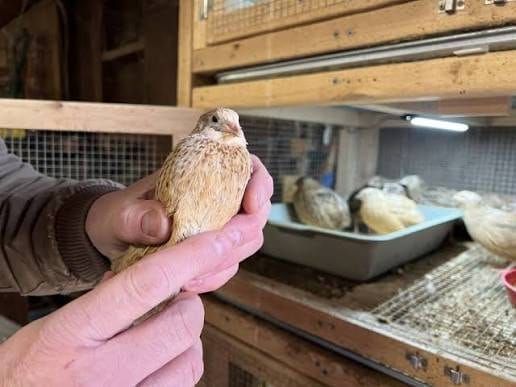
On standard-colored birds, look at the breast from ~3–4 weeks: solid rusty-red chest = male; cream chest with dark speckles = female. Solid-colored varieties need vent sexing at maturity.
By about week three, your identical puffballs start declaring themselves, if you know where to look, and if their color variety allows it. Here are the three methods in the order a backyard keeper actually deploys them.
Method 1: Breast feathers (standard colors, ~3–4 weeks)
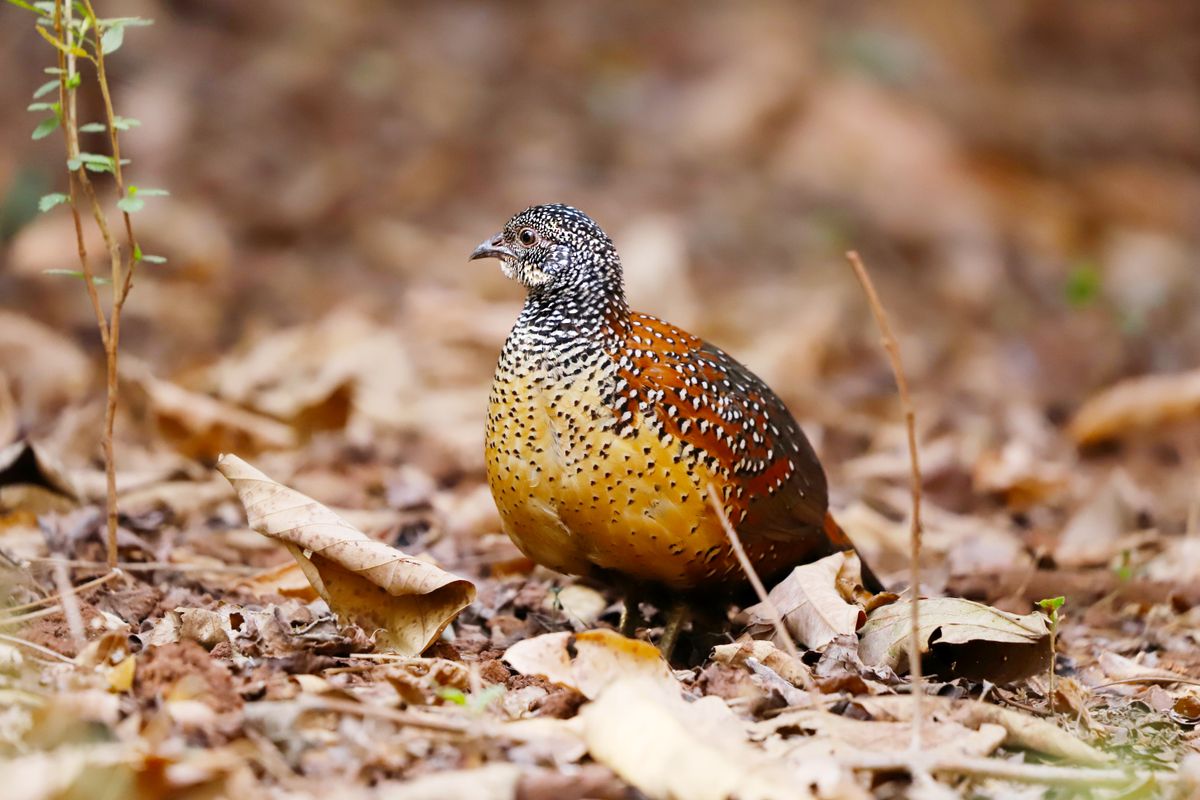
On wild-type Coturnix (the brown "pharaoh" pattern most birds wear), the sexes wear different shirts. The research and extension literature describe it the same way: males have brownish-red breast feathers; females have tan-to-gray breasts with black speckles. In keeper shorthand: solid rusty chest, boy; speckled cream chest, girl.
Timing: dimorphism emerges as contour feathers replace down at 2–3 weeks, but calling it at exactly three weeks invites errors. Keepers regularly report apparent speckling that resolves into solid red a few days later, so week four is the confident call, and even then expect a few misreads. Sort your definites and re-check your maybes in a week.
The catch: this only works on varieties that kept the pattern. Solid-colored birds (Texas A&M and English Whites, Tibetans, and other uniform varieties) show no breast difference. For those birds, you're waiting on Methods 2 and 3. (Which varieties are feather-sexable is covered in the color guide.)
Method 2: Vent sexing (any variety, at maturity ~5–8 weeks)
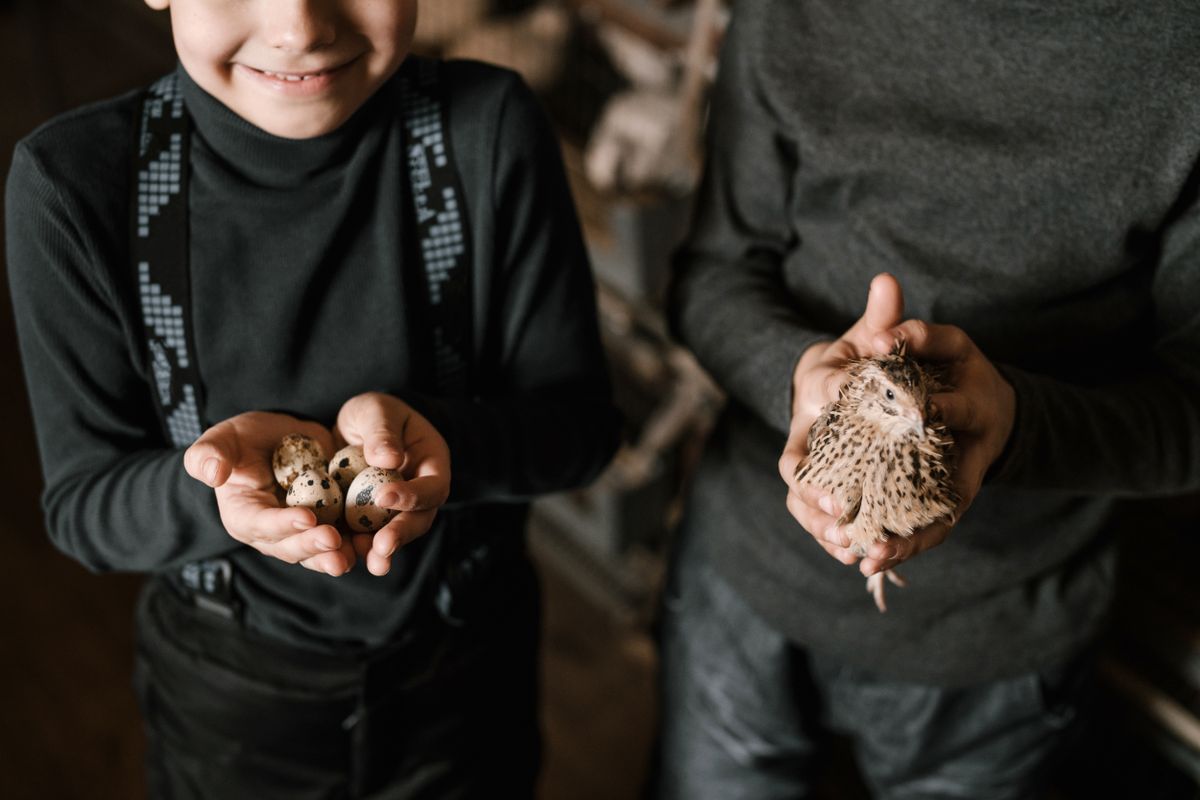
Definitive, slightly undignified, works on everything. At sexual maturity, males develop a gland above the vent that fills with a distinctive white foam. Press gently beside the vent of a mature male and foam appears; a hen produces none, and her vent is flatter and may look larger or pinker when she's in lay.
The method's one weakness is the calendar: the foam gland isn't reliably developed before maturity, so working keepers place useful vent sexing anywhere from ~4–6 weeks (experienced hands) to 6–8 weeks (beginner-reliable). If you're new, wait toward the late end and expect a learning curve. Confidence comes after sexing dozens of birds, not two. Handling: bird on its back, wings secured, tail toward you, part the feathers, gentle pressure beside the vent. Firm, calm, brief.
Method 3: Ears (crowing, ~5–6 weeks on)
The zero-handling method: males crow, a repeated, sharp, head-vibrating call that is unmistakably an announcement. Hens don't crow, though they do make softer contact and alarm calls, so "made a noise" isn't the test; "performed the territorial number" is. It's binary in one direction: a crowing bird is male; a silent bird is merely undecided evidence.
Why you're doing this at all
Flock ratio. Research flocks get high fertility at one male to two or three hens, and backyard practice commonly runs three to five hens per male. Excess males in one pen means fighting and over-mated, feather-bare hens. Sexing at 3–4 weeks (standard colors) or by 8 weeks (everyone) is what lets you rehome, separate, or plan the meat side before the adolescent-male drama begins, which, like everything with Coturnix, arrives early.
FAQ
All five of mine look speckled. Did I hatch all hens?
Possibly, or they're not done dressing. Re-check weekly to week five, then vent-sex the holdouts.
Is DNA sexing a real option?
It exists; PCR sexing methods are published for Coturnix. But it's a research tool no backyard keeper needs.
My "hen" just crowed.
Then congratulations on your rooster. Crowing males occasionally read speckled-ish, especially in poor light or mixed varieties; the crow outranks the shirt.