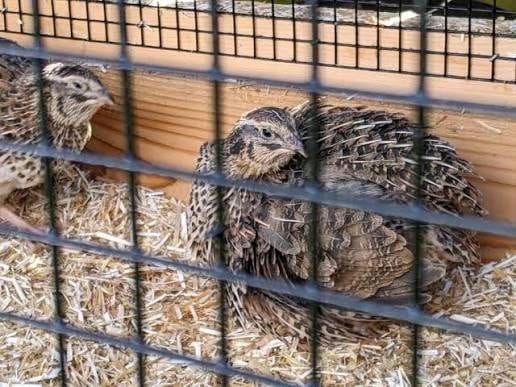
Plan on 1 square foot per bird as the comfortable backyard standard, and up to 1.5 in an aviary. Production cage systems pack three or more birds into that same square foot, which works but leaves no margin.
Here's a spec where the sources disagree, and the disagreement is worth understanding rather than averaging away.
The spread: commercial guidance packs birds far tighter than backyard guidance does. Australia's NSW Department of Primary Industries, in its classic quail-raising factsheet, allows as little as 125–145 square centimeters per bird in production systems, which works out to several birds per square foot (fewer for jumbos). Backyard-welfare guidance recommends at least one square foot per bird in wire-floored colony setups; Meyer Hatchery's care guidance uses the same floor. And aviary keepers targeting natural behavior commonly aim for 1.25–1.5 square feet per bird, with one as the workable floor.
Why both camps are "right": density is a trade. Tighter packing works, it's how commercial operations run, but it spends your margin: more pecking-order friction, faster manure load, less room for a bullied bird to get away, nothing spare when something goes wrong. Space is the cheapest welfare and management buffer you can buy, which is why Quail Stead's recommendation is the comfortable end: one square foot per bird minimum, more in an aviary. Six hens: a 2×3 footprint. Twelve: 3×4. These are end-table numbers, not farm numbers.
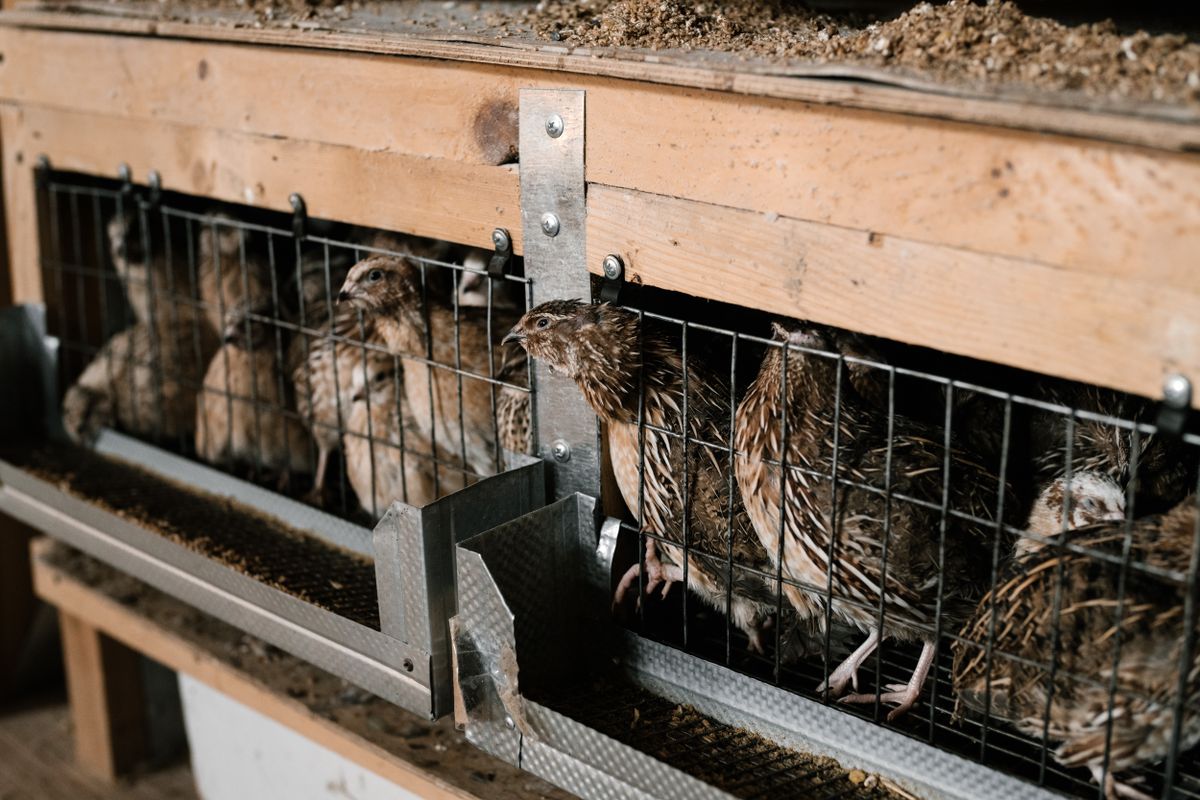
One counterintuitive nuance from working keepers: more isn't infinitely better. Coturnix are ground-dwelling prey animals, and keepers consistently report that very large, open, coverless spaces make them nervous and flighty rather than content. Big enclosures want clutter: cover, huts, dust-bath trays, visual breaks, not emptiness. Space plus cover, not space instead of it.
Height is its own decision, and it's binary. Startled quail flush vertically, hard (the flying page explains). So enclosures are built either low, with about a foot or less of ceiling so a bird can't build launch speed, or tall, four feet and up, where a flush loses steam before the ceiling; Meyer Hatchery draws the same lines at a hutch under about ten inches or a pen four feet or taller. The middle band is where birds hit lids at full speed, and keeper guidance consistently steers around it. Waist-height cages with hard ceilings are the classic bad product.
Chick space is a separate, smaller schedule, covered in the brooder guide; the full enclosure-design decisions (wire vs solid floors, coop vs aviary, predator-proofing) live in the Housing hub.
FAQ
Is 1 sq ft/bird cruel compared to chickens' allowances?
Different bird: a Coturnix is a tenth of a chicken's weight and doesn't roam-and-return. It holds a small home range and wants cover. Match the standard to the species, then err generous.
Balcony covey, realistic?
Six hens in a 2×3+ predator-proof, lidded, wind-sheltered enclosure is balcony-viable. Mind droppings management and any building rules.
Do they need vertical enrichment like perches?
Not perches. Quail are floor birds. Their enrichment budget goes to cover, hideouts, and a dust bath, which they will use enthusiastically.