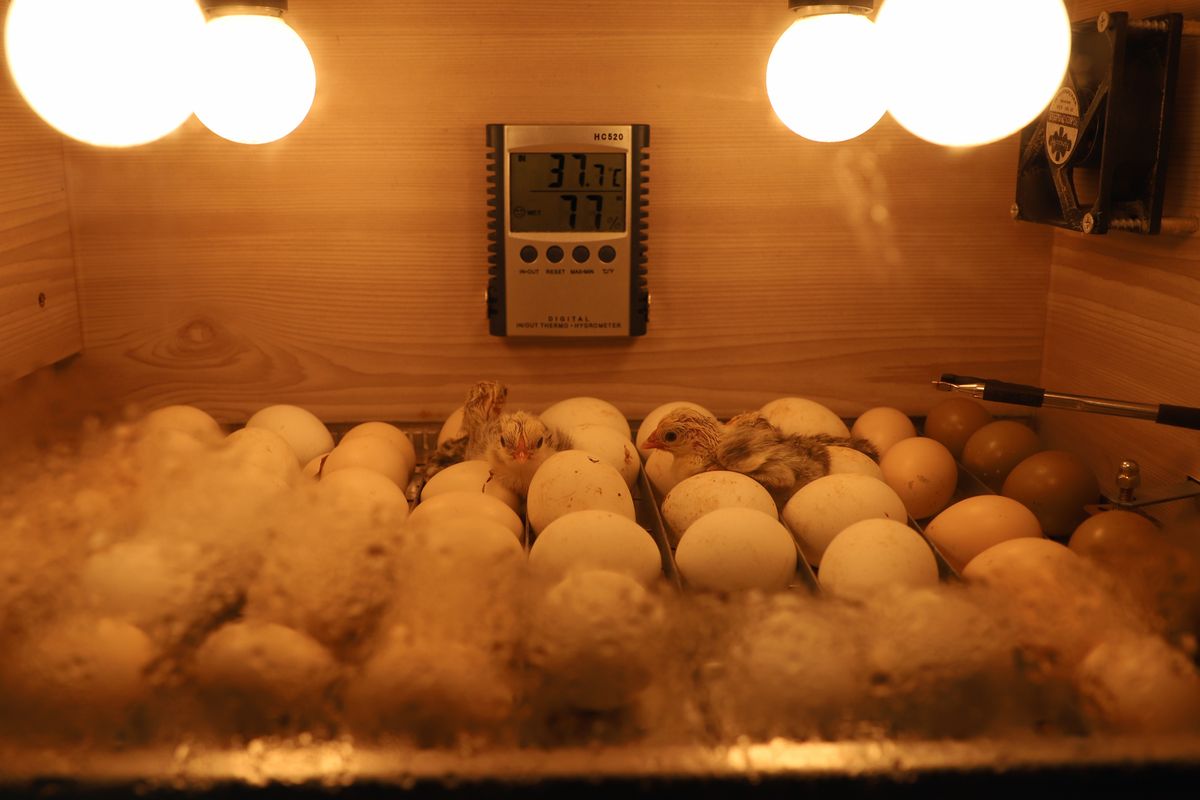
For most first hatches: the Nurture Right 360, the machine quail keepers most often point beginners to. For precision and longevity: a Brinsea. For volume: the GQF Hova-Bator 1588 or a cabinet.
How to actually choose (the part that matters more than the picks)
Forced-air over still-air, the one near-mandatory call. A fan circulates heat evenly; without one, the box layers warm-to-cool top-to-bottom, creating hot spots and making every thermometer reading a question about altitude. Still-air machines can hatch quail (run ~102 °F measured at egg-top height, the standard extension guidance), but they demand attention a beginner shouldn't have to spend. Every pick above is forced-air.
Automatic turning. Quail eggs want turning at least three times daily for 14 days. Hand-turning works and costs nothing but 42 disciplined interruptions; a turner removes the most commonly skipped chore in home incubation. Check that quail-sized rails are included or available, most turners ship set up for chicken eggs.
Temperature stability, not temperature features. A machine that holds 99.5 °F through the night in a normal room beats one with an app. Owner reports over time are the only real signal here, which is what the picks above are ranked on.
Automatic humidity is the luxury that's actually useful. Manual humidity means monitoring water channels twice daily for 17 days. Machines with humidity pumps (Brinsea EX class) reduce failure surface; that's the upgrade to pay for if you'll hatch more than once or twice a year.
Capacity, in quail terms. Quail eggs are small; most machines hold roughly 1.5–2.5× their chicken rating with the right rails, but published quail capacities vary between sources for the same machines, so treat any specific quail number (including ours) as verify-before-purchase.
And regardless of machine: an independent calibrated thermometer/hygrometer inside, at egg height. This is the advice working keepers repeat most, across every brand and budget. Built-in displays are estimates.
What not to buy
The $25–40 unbranded mini-incubators: owner reports consistently describe temperature swings with ambient room changes, the exact failure mode that kills hatches. As a knowingly-chosen learning toy, fine. As the machine your first fertile eggs depend on, it's a false economy; the fertile eggs cost more than the upgrade.
FAQ
Can I use a chicken incubator for quail?
Yes, same 99.5 °F. You need quail rails for the turner, and your effective capacity goes up.
Is the cheapest Brinsea worth it over the Nurture Right?
Different trades: Brinsea Mini = tighter control and longer life, small capacity, lid-opening to refill water; NR360 = triple the room and external water fill, looser tolerances. For one experimental hatch: NR360-class. For a machine you'll run for a decade: Brinsea.
What about cabinet incubators?
The right answer at scale: hundreds of quail eggs and a separate setter/hatcher workflow, which is overkill for a first season. If you're planning a breeding operation, the GQF Sportsman class of cabinets is the standard step up.